
Overflow pattern
Which side of the home spills first during rain? Note nearby doors, windows, driveway, porch, pool area, or landscaping.
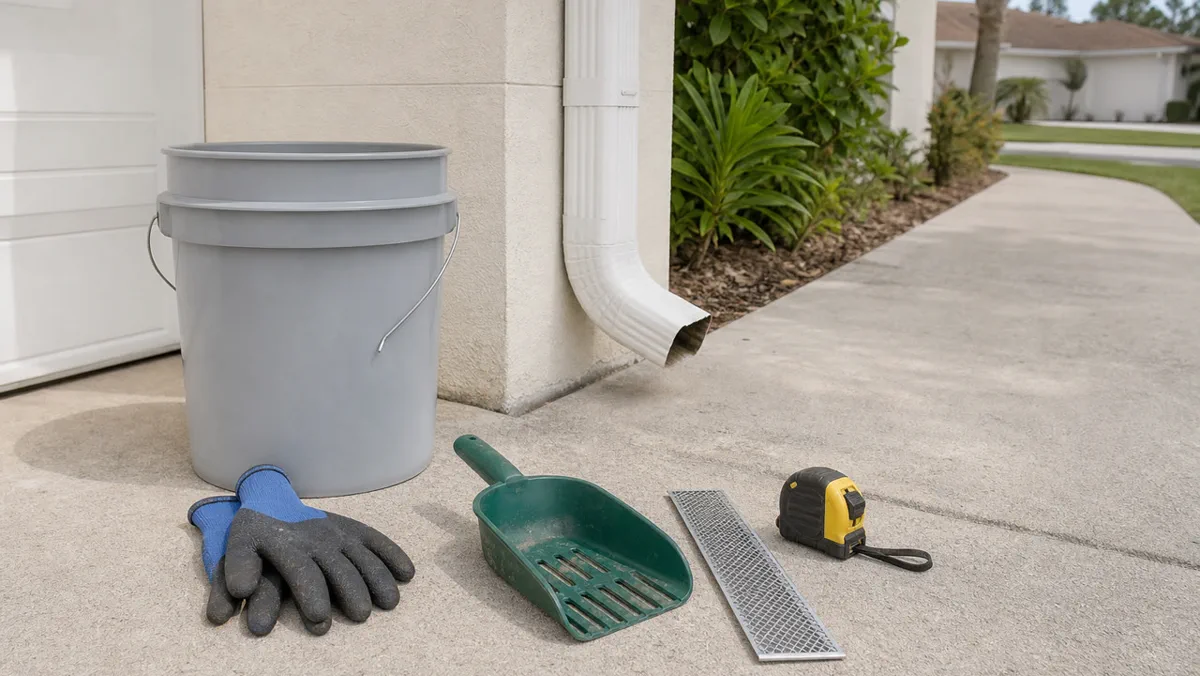
Which side of the home spills first during rain? Note nearby doors, windows, driveway, porch, pool area, or landscaping.
Look for visible pine needles, oak leaves, roof grit, weeds in the gutter, or debris piled at valleys and corners.
Check whether outlets are buried, connected to underground drains, splashing near the foundation, or not moving visible water.
Mention whether guards exist, whether debris is sitting on top, and whether sections appear bent, loose, or clogged.
Locked gates, dogs, steep slopes, pool cages, fragile landscaping, and narrow side yards should be mentioned early.
Say whether the need is routine maintenance, pre-storm preparation, post-storm cleanup, or a recurring overflow concern.
If you can safely take ground-level photos, they may help clarify the problem. Do not climb a ladder just to gather images for service planning. A useful written description is better than unsafe homeowner inspection. Mention visible symptoms and access notes instead.
The service estimate should also ask what not to do. Avoid walking on fragile surfaces, assuming roof work is included, or treating every water problem as a cleaning issue. A cautious scope protects both the homeowner and the gutter-cleaning professional.
After you submit details, notice whether the response asks specific questions or jumps straight to a vague price. Good response should care about the debris, downspouts, access, and reason for the call. That is how a simple homeowner service page becomes more useful than a thin directory listing.
If the property has recurring overflow after prior cleanings, say so. Recurring problems may point to slope, capacity, underground drainage, or repair concerns. Routine cleaning may still be needed, but the estimate should acknowledge that history.
Before approving work, confirm whether the provider will tell you if a section appears loose, sagging, separated, or unsafe to clean. That does not mean the cleaner is responsible for solving those conditions; it means you want to know when the cleaning scope has reached its limit.
After the cleaning, watch the same problem area during the next rain. If water now moves correctly, the blockage may have been the main issue. If overflow continues, keep notes and ask whether the next step is a downspout, drain, slope, or repair service visit rather than another routine cleaning.