
Seasonal gutter cleaning
Routine cleaning should address loose debris in accessible troughs, the common corners where water slows, and the places where leaves or needles have settled after windy weather.
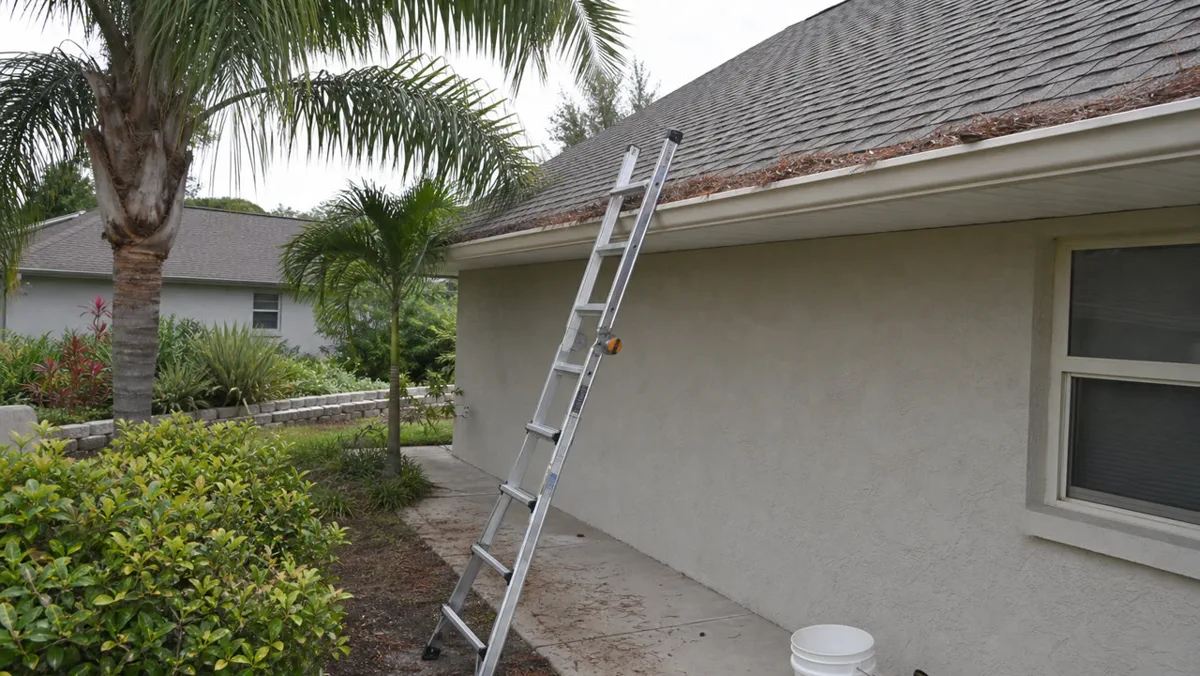
Routine cleaning should address loose debris in accessible troughs, the common corners where water slows, and the places where leaves or needles have settled after windy weather.
Downspouts deserve a separate question because they can stay clogged even after the visible trough is cleared. Confirm whether elbows, outlets, and ground-level exits are part of the scope.
Valleys can feed gutters with a concentrated pile of leaves, needles, and grit. Clarify whether valley debris is reachable and whether removing it is part of the cleaning discussion.
If guards are installed, fine debris still needs attention and future maintenance still matters. Guards are not a substitute for every cleaning need.
Before summer rain, focus on overflow points, rear downspouts, pool-area rooflines, and sections near heavy tree cover so the service targets the most important water paths first.
Loose hangers, separated seams, sagging sections, or damaged elbows should be flagged as repair questions. Cleaning copy should not pretend those are automatically solved by debris removal.
The best gutter cleaning visit is not always the shortest or cheapest. It explains which runs are being cleaned, whether downspouts are included, how guards or screens are handled, and what will happen if a section appears damaged or unsafe to access. A vague estimate can leave the most important water path untouched.
For Palm Coast properties, ask about the rear roofline, second-story sections, pool enclosure edges, and roof areas under trees. Those are common places where access, debris load, or overflow evidence changes the work. If a provider only says “standard cleaning,” ask what standard means before approving the job.
Avoid assuming a gutter cleaning contact is also a roof service, drainage contractor, or structural repair provider. If staining, rot, damaged fascia, or underground drain problems show up, those may require a separate professional. The service estimate should identify the boundary rather than blur it.
Pine needles, oak leaves, roof grit, palm debris, and valley buildup can slow water until it spills over the trough. Mention where overflow happens and whether it appears during normal rain or only heavy storm lines.
A gutter can look clean while elbows or discharge points remain blocked. Tell the service response which downspouts back up, whether water exits near the foundation, and whether underground drains may be involved.
Guards and screen-cage edges can collect debris at seams and transitions. A cleaner can discuss what is reachable and whether the guard style changes scope.
Before rainy season, the most useful plan focuses on rooflines that already overflow, tree-heavy sides of the home, and areas where water pools near walkways, landscaping, or foundations.
For scope questions, review gutter cleaning cost factors or schedule gutter cleaning help.